
Unexpectedly… a Bit More on “Stolen” Checks

Ok, dear readers… it’s been an interesting few days.  Some of you may recall my Monday post about the difficulties more and more of us are facing in this crazy world of workers’ compensation: the “stolen” check.  Naively, I asked, at the end of my post, what my beloved readers thought about this issue, and what defendants can do to make sure they don’t get taken in by the cheats and liars out there that not only receive their checks and cash them, but cast doubt on those workers truly victimized by stolen disability payments.

Well, the responses were a bit… surprising.  Although several of the comments were meritorious and thoughtful, others were… not so pleasant.  Accordingly, I’ve declined to publish the comments (sorry folks – no colorful language today), but did want to relate the highlights.

One thoughtful reader pointed out that one of the problems is the fact that the allegedly injured worker can cash these checks at check cashing places.  Once cashed, the “stop payment” is not particularly effective, and the cash-checking place now has an incentive to affirm that the check was cashed by the appropriate person.

One commenter suggested putting language on checks requiring a photo ID to be cashed.  However, the check-cashing services do not make money by turning down checks, so why would such services feel bound by a note on a check?

Another reader related that workers’ compensation defendants could easily solve all the world’s ills (at least with regard to stolen checks) by offering direct deposit.  This commenter even suggested that the defense community brings this ill upon itself by hoping that most check’s won’t get cashed.

Now, Labor Code section 4651 does seem to provide the opportunity for employers and insurers to make disability benefits payable through direct deposit.   However, this approach brings its own problems.  If you’re dealing with the type of individual that intends to defraud the insurer or employer by cashing checks and then claiming them lost, why would they consent to direct deposit?

After all, section 4651 provides that “[n]othing in this section shall prohibit an employer from depositing the disability indemnity payment in an account in any bank, savings and loan associations or credit union of the employee’s choice in this state, provided the employee has voluntarily authorized the deposit.”  (Emphasis belongs exclusively to your humble blogger).  All the man with intent to defraud in his heart need do is refuse to authorize the deposit, and we’re back to square one.

Again, dear readers, our problem is not with the honest worker who makes a deal sticks to it, because no security measures are needed there.  Instead, our problem is with the fraud, the thief, the cheater who intends to steal money: why would such a villain agree to make his wicked efforts harder to complete?

One of your humble blogger’s “anarcho-capitalist” mentioned something about Bit-Coin, and, of course, my communist friend suggested an agrarian community where, before long, there would be no need for workers’ compensation because we’d all be unemployed.

Perhaps at the next round of legislative reforms, we can include a Labor Code section allowing some alternative payment delivery options, such as delivery of benefits checks at the employment location, requiring applicants to open a bank account or provide one to have benefits deposited there, or some other clever idea yet to come.

The Growing Problem of the “Stolen” Check

Hello, dear readers!

So, another weekend has come and gone.  We laughed, we cried, we sipped our scotch and swallowed our pride… and that was just on Friday night.

Imagine my shock, my dismay, my absolute alcohol-fuelled horror when I curled up affectionately with the latest workers’ compensation cases, only to discover a growing problem defendants are facing when things get litigated – the “stolen” check.

What do you do when you or your agent has looked the applicant, or the applicant’s attorney, square in the eye, agreed on a number, and shaken hands… you have a deal.  We give you the money, your claim goes away, and all is right with the world.

After that, we all pat ourselves on the back – the check gets issued, one to applicant’s counsel and one to applicant, and another file is closed… off to another adventure!  Or not…

You see, some injured workers have their checks stolen, their signatures forged.  But some injured workers get their checks, cash their checks, and then just say that they didn’t get them.

When the matter comes before a WCJ, the WCJ, being human, can only do so good a job of deciding if the injured worker is to be believed.  Sometimes the injured worker is telling the truth.  Sometimes the injured worker is lying.  Sometimes the WCJ gets it right.  Sometimes the WCJ gets it wrong.  We’re all only human, after all.

In the matter of Patino v. Aramark, a 2015 writ denied case, applicant claimed that a portion of her permanent disability advances were stolen, her signature was forged, and the checks were cashed without her knowledge.  The defendant made the argument that by mailing them to the address listed by applicant, its obligation to provide payment was fulfilled.

When the matter proceeded to trial, the WCJ found that applicant testified credibly to not having received or cashed the checks.  The WCAB denied reconsideration without comment, and the WCAB denied review.

Most of the time, payments are mailed, and received, and that’s the end of it.  But what can defendants do to avoid the delay and uncertainty of these situations?  How can we avoid putting Workers’ Compensation Judges in the difficult position of trying to decide what did and did not happen?

Your humble blogger has seen C&Rs drafted and approved that included language allowing defendants to hand-deliver settlement payment, and requiring photo-identification for delivery.  After all, how hard is it to take a picture of photo ID before you hand over the check?

For the defense side, however, that’s an added expense to hundreds if not thousands of files each year.  That means less money in the settlement pool, or higher reserves and rates for employers, meaning higher prices for consumers… your humble blogger submits that each workers’ compensation defendant might run the numbers and weigh the likelihood of a claim of no delivery against the cost of a courier on all or most of its files.

While this may work for a huge settlement check, it’s practically impossible to do this every two weeks for temporary disability benefits or permanent disability advances.

What do you think, dear readers, is it worth it?  Outside of moving one’s business outside of California, what are you supposed to do to make sure you don’t end up paying your settlement amount twice?

For further reading, don’t forget to review this blog post in 2012 on the same topics…

Statute of Limitations Bars Widow’s Death Claim

Happy Wednesday, dear readers!  Some of you, no doubt, have future lawyers (or, at least, future law students) in your lives, and you’ve probably spent the last week and a half patiently calming their poor nerves as they await the results of the dreaded LSAT examination.  Practicing attorneys will probably smile as they think fondly back to the inexplicable delight that is taking the bar exam and waiting until just before Thanksgiving to give friends and family members the news.  In either case, keep calm and carry on.

Your humble blogger is no stranger to taking positions disliked by many in the workers’ compensation community, and today’s post should be no different, as the target of my post is (unintentionally, but effectively) a widow’s claim.

In the case of Thompson v. Huhtamaki Americas, Inc., a 2015 writ denied case, applicant (the late Mr. Thompson) filed an application alleging a cumulative trauma as a result of toxic exposure.  Sadly, applicant passed away in June of 2012, without resolution of his workers’ compensation claim.  Shortly thereafter, applicant’s counsel filed a petition to substitute applicant’s widow in his case.  In January of 2014, applicant’s widow also filed an application seeking death benefits.

Defendant raised the statute of limitations, arguing that Labor Code section 5406.5 holds that “[i]n the case of the death of an asbestos worker … from asbestosis, the period within which proceeding may commence for the collection of the benefits provided by Article 4 (commencing with Section 4700) of Chapter 2 of Part 2 is one year from the date of death.”

Relying on the case of Earley v. Workers’ Comp. Appeals Bd. (2003), a writ denied case, the WCAB majority reversed the workers’ compensation Judge’s finding in favor of applicant on the statute of limitations issue.  As held in Earley, when a worker establishes a date of injury inter vivos, “the date the widow discovered that the decedent’s death was industrial did not create a new date of injury.”

Earley, in turn, noted the California Supreme Court case of Massey v. WCAB (1993), wherein California’s Justices ruled that any death benefits claim must be both within 1 year of the death and 240 weeks of the underlying injury, or be barred by statute.

One commissioner dissented, reasoning that he would construe applicant’s substitution petition as an application.

Now, as a cold, heartless, defense attorney, your humble blogger can’t really disapprove of a decision which favors the defense.  However, as a human being, it’s hard not to be moved by the plight of a widow.

One takeaway from this we should have in mind is that it may be worthwhile to pursue the statute of limitations defense after all.  One common phrase everyone loves to say, whether it is a defense attorney muttering it with sympathy or an applicant’s attorney passionately chanting it as he or she pounds on the Hearing Room table, is: “the statute of limitations is a disfavored defense!”

It’s true, it is – not by defendants, of course, but by many of the other pieces on the Chess Board that is our workers’ compensation world.  That being said, the defense’s willingness to litigate the issue and take it up on reconsideration resulted in a total bar to the claim.  Defendants should consider pursuing this defense along with others if the facts lend themselves to the narrative.

In the meantime, dear readers, I will resign myself to hearing “the LSAT scores aren’t out yet!” a few times a day.

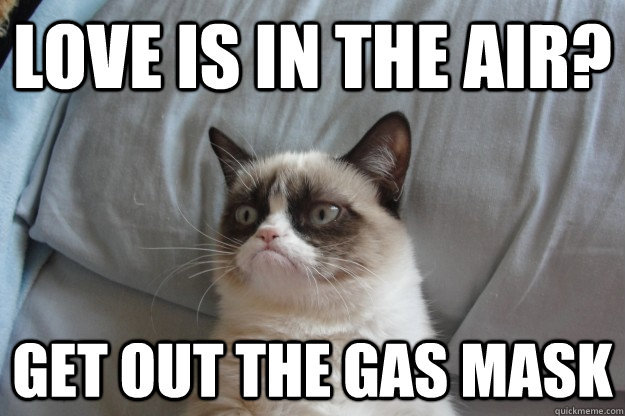
Happy Valentine’s Day 2015!

Happy (Upcoming) Valentines Day, dear readers!

As everyone knows, St. Valentine is the patron saint of chocolate makers and flower sellers, not to mention card manufacturers.  So, in honor of the festivities your humble blogger wants to provide you with a romantic and touching story from the archives – one to carry you into the happiness that’s coming just tomorrow.

So, before I begin this post, I want you to flip through the AMA Guides, the 1997 rating schedule, and even the PDRS: which page deals with a broken heart?

That was the question faced by the parties in the matter of M****** v. California Department of Transportation, a 1981 writ denied case.

Applicant filed an application after his romantic advances were rebuffed by a co-worker.   Things started getting heated at work, and not in the good way – applicant’s supervisor had to instruct both him and the subject of his unrequited love to keep away from each other unless work required interaction.

Why… yes… applicant was seen by a psychiatrist following his claim of a CT to the nervous system.  The psychiatrist reported applicant had a lifelong personality disorder, and had reacted with “anger, resentment, and rebellion” when his co-worker rejected him (your humble blogger just has to ask – HOW WAS HE SUPPOSED TO REACT?!? Obviously, this psychiatrist’s mind could comprehend a diagnosis, but his heart could not comprehend loooooooove.  Not that I’m bitter or anything…)

The psychiatrist further went to describe this as “a totally non-industrial situation.”  The WCJ found applicant to not have sustained an industrial injury, and the WCAB and Court of Appeal followed suit, rejecting applicant’s appeals.

We all have that one that got away.  For your humble blogger, it was a summer afternoon in 2001.  I had just gotten my license and driven to the local Krispy Crème.  As I waited in line, our eyes met, we knew we were meant for each other, then the guy in front of me ordered the last chocolate glazed donut and there I was, all alone in the world… that donut left a hole in my heart no pastry could ever fill… but such is life.

So, dear readers, enjoy your weekend – and remember, it’s better to have loved and lost, then never to have loved at all…
grumpy cat valentines day

CHP Officer Sentenced in WC Fraud Case

My wise and beloved readers will recall that I previously blogged on the case of (former) CHP Officer Tony Yao.  Recently, convict Yao was sentenced to pay $80,555.15 in restitution, give years of formal probation, and a stayed term of 240 days in county jail (if he can get into the Sheriff’s work-release program).

I will allow this grammatically challenged rodent, which appears to be a river otter, to communicate my reaction:

disappointed river otter

Mr. Yao was a CHP officer, who not only bore the responsibilities placed upon any citizen for the preservation or benefit of society, but also bore the additional duty of a law enforcement officer.  The damage done by Mr. Yao goes beyond the dollars and (non)sense of committing workers’ compensation fraud (see what I did there, dear readers? Aren’t I clever…?)

How can we seek justice for employers and insurers when they are defrauded by lying workers when law enforcement officers are engaged in the same behavior?

Here’s to hoping that future transgressions meet with stiffer punishment, because, from your humble blogger’s vantage point on his high horse, having to pay back some of the benefits received and possibly having to wear an ankle bracelet does not offer sufficient deterrence value for behavior as damaging as this.

But, then again, perhaps someday your humble blogger’s humble blog posts will merit a punishment as well…


When AME and WCJs Disagree on Credibility re: Psyche Claim

Hello, dear readers!

Psyche injuries are curious things – and it’s always fun to try to unravel issues such as causation when it comes to psyche claims.

In the case of Clacher v. The Call Center, LLC (writ denied), applicant sustained orthopedic injuries after being struck to the ground by a co-worker.  She claimed psychiatric injury as well orthopedic, but the psyche AME found that applicant’s report of her assault was not plausible, but if the assault occurred, then it was likely the cause of the current psyche problems.

At trial, the Workers’ Compensation Judge found applicant to be truthful, and to have credibly testified to the assault, and to the symptoms that manifested only after the assault.  So, when defendant sought reconsideration, it challenged this very finding – after all, the AME in psyche didn’t believe applicant’s version of events, and thought she had pre-existing psychiatric problems.

The WCAB reversed, and the line of logic went as follows:

  1. Labor Code section 3208.3(b)(1) requires an employee to establish that actual events of employment were predominant as to all causes of the psyche injury;
  2. An employee alleging injury to the psyche resulting from a violent act requires only substantial cause rather than predominant cause (35-40% vs. 50%) (Labor Code section 3208.3(b)(3))
  3. Throughout the medical record, the Psyche AME affirmatively opined that the psychiatric injury was NOT caused by actual events of employment.

The issue that was of particular interest to your humble blogger was that of the role of each party in the process: the AME concluded that applicant was not a credible historian, and did not believe the work-assault caused her psychiatric injury.  It appears, from the Lexis summary, that the AME did not even believe that a work assault took place.

On the other hand, the WCJ obviously did… finding the injured worker credible, as well as her telling of the events which lead up to her injury.

So, when the WCJ determines a lay fact, isn’t the expert witness, the AME in this case, to some extent required to adopt that fact and apply the medical expertise to it to reach a conclusion?

What if the situation was reversed?  What if an AME had found an applicant to be credible, but an aggressive cross-examination lead the WCJ to conclude that applicant’s testimony (and statements) should be rejected as untruthful?  Would the AME’s opinions as to the credibility of the injured worker trump those of the WCJ’s?

Ultimately, the WCAB seemed to find, in the Clacher case at least, that it did not appear possible for applicant to establish that the psyche injury was compensable when the medical record did not support such a finding.

A defense victory to start off your week, dear readers!  Isn’t that a good thing?

Stipulation re: non-MPN PTP Negates Subsequent Efforts to Bring IW Into MPN

Happy Friday, dear readers!

Recently, your humble blogger was sitting at the back of a board hearing room, and overheard a workers’ compensation judge express some mild frustration at the extent to which settlement papers have grown over the years – addenda and supplemental stipulations and additional waivers and extra releases and so on…

Your humble blogger gets it and agrees – it’s silly that we can’t just have reasonable agreements with simple understanding.  Here is money – good luck to you and may our paths never cross again under such circumstances.

But, just like every stop sign on a country road marks an auto-related fatality, every additional paragraph, disclosure, or stipulation reflects another war story…

How do you feel about always putting the issue of primary treating physician in dispute?  How would you feel about always having, as a triable issue, applicant’s primary treating physician?  How do you feel about having to write in additional stipulations that the current PTP is not in dispute, but the parties are deferring the issue of litigating the primary treating physician and Medical Provider Network status of the current PTP, without any waiver of rights…?

In the recent case of Shawl v. Steve’s Automotive, applicant was treating with a non-MPN physician since before the defendant had an MPN.  When the matter of treatment, and the dispute regarding MPN status, came to a hearing AFTER defendant had set up an MPN, the parties had stipulated on a 5-pager that the non-MPN physician was the primary treating physician.

When the defendant tried to move applicant into the MPN, of which that primary treating physician was not a part, applicant objected, arguing that defendant had previously stipulated to the non-MPN physician’s status as the primary treating physician and that regulation 9767.9(a) allows an employer to authorize non-MPN treatment.  The WCAB adopted this reasoning, reversing the WCJ and finding that the stipulation that, at the time the 5-pager (or, pre-trial conference statement) the primary treating physician was binding.

There was, of course, a dissent, reasoning that the en banc case of Babbitt v. Ow Jing (2007) held that a defendant can move an injured worker into the MPN at any time, regardless of the date of injury or the date of an award of future medical care.  Presumably, this would be restricted by 9767.9(a), which provides for some continuation of care.

The dissent further made the point that the legislature allows four circumstances, as described in section 9767.9, which allow an employee to resist a defendant’s efforts to move that employee’s care into the MPN.  Recognizing that the current PTP is a non-MPN PTP is not one of them.

So, in this case, the WCAB majority held that the one-time stipulation that the current PTP was a non-MPN PTP, was binding on the defendant, presumably for the foreseeable future.  If that’s the case, perhaps defendants should be cautioned to ever stipulate to a non-MPN PTP as the current treating physician, for fear that such a stipulation may, in the future, defeat efforts to move an injured worker into the MPN.

By the same rationale, if defendant authorizing a 25th chiropractic visit, and agrees that for the 25th visit the chiropractor is still the primary treating physician, has the defendant waives its rights under California Code of Regulations 9785(a)(1)?  Does the authorization of the 25th visit authorize visits ad infinitum?

Or, perhaps we have to add another paragraph for this narrow scenario every time care is authorized.  Perhaps the issue of who the PTP is should be litigate at every instance to avoid a waiver of rights.  Your humble blogger, with all respect and deference, hopes that future panel cases may suggest a different answer to these questions.

Have a good weekend, folks!

AB 202: Let’s Make NFL Cheerleaders Employees!

Hello, dear readers!

So, this weekend was the big game, huh?  Did you notice those ladies with the pom-poms and the uniforms cheering their teams on?  For those that watched the Super Bowl, it must have been so frustrating to try to focus on the game while that nagging question kept scratching at your brain… are those cheerleaders employees or independent contractors?

Assembly Member Lorena Gonzalez has introduced AB 202, which would have NFL Cheerleaders provided “all of the rights and benefits afforded to its employees under this code, regardless of the terms and conditions under which the cheerleader performs.”

Now, as we all recall from School House Rock, a bill has a long way to go before it becomes law…

http://vimeo.com/24701987

It’s no secret how your humble blogger feels about any efforts to infringe upon the right of reasonable parties to enter into contract.  The suggestion that a cheerleader, or any other reasonably intelligent adult, cannot negotiate the terms under which services are exchanged for money is a little silly.  We all negotiate for the things we want and need every day.

The effect this would have, though limited in scope, reflects a further lack of understanding in the California Legislature as to the problems plaguing California’s economy, and, although it seems unlikely that too many of California pro-sports teams will leave, the same though process will continue to drive other employers away.

Cheer!

TN Gets Ball Rolling Towards WC Opt-Out; CA Not So Much

One of the wonders of the United States if Federalism: 50 concurrent laboratory experiments all running different methods to see what works, what doesn’t, and why.  In California, for example, we have workers and employers, physicians and lawyers, services providers, insurers, self-insurers, re-insurers, and self-insured groups, all sewn together into a giant sack called California’s workers’ compensation system.  And, in fact, there is constantly growing frustration as to how the system works, or rather why it doesn’t.

Injured workers often feel they’re not getting enough.  Un-injured workers sometimes feel their allegedly injured counterparts are getting too much, and shrinking their paychecks in the process.  The employers would rather have independent contractors, and often try to contract for independent contractor status, only to have the once eager-to-agree worker now seek to have this agreement nullified by the Workers’ Compensation Appeals Board.  Employers often express frustration with bearing not only the cost of the benefits, but also of administering the benefits.

What if we were to restore the right of individuals to contract once more?  That’s what Texas has done with its “opt-out” law, and, as of May of 2013, Oklahoma adopted its own “opt-out” law for workers’ compensation as well.

It looks like Tennessee may be getting the ball rolling in that direction too.  Mark Green, state senator from the volunteer state, has announced that one of his proposals in the 2015 legislative session will be to allow Tennessee employers to “opt out” of the state’s workers’ compensation system.

Your humble blogger has previously proposed consideration of allowing employees to purchase their own workers’ compensation insurance, but an opt-out would not be a bad idea for Californians to consider at this point.  Certainly, with a population of almost 40 million, the suggestion that there should be flexibility in approach to an area that covers industries spanning from ancient farming methods to futuristic high-tech and everything in between is not unfounded.

In any case, Tennessee is apparently going to be exploring new options, and California employers may soon find yet another destination to explore, much like Tesla explored Nevada, Toyota explored Texas, and a few other examples that are just a google search away.  Perhaps it’s time for California to figure out a way to be more flexible and dynamic, and to free up the exchanges between employees and employers.

Now, that being said, your humble blogger is going to get back to work finding a relocation

The Flu and Workers’ Compensation

Good Monday to you, dear readers!  Last week, your humble blogger watched in utter horror as his body valiantly but ineffectively fought off the flu.  As rumor has it, as certain strain of Influenza A is not covered by this year’s flu shot, which is of particularly little comfort as your humble blogger didn’t manage to get the flu shot this year.  As I recall, the though was something along the lines of “what are the odds that I would get the flu?”

Well, no doubt, odds had nothing to do with it, and in some applicant attorney’s or lien claimant’s office is a little voo-doo doll shaped and dressed like a striking and handsome defense attorney, with a flu needle embedded deep into the poor doll’s lungs.  Certainly, as Friday rolled around and my humblest of blogs was missing another of those charming blog posts, the villain laughed and laughed.  I hope, sir, that your soul was worth it!

In any case, for better or worse, your humble blogger is back now – but this terrible experience got me thinking – is the flu compensable?  Can a worker claim an industrial injury in the form of the flu?  Some flu symptoms last a long time, and some cause complications… so does your humble blogger have a claim?

After all, our law provides insidious disease and cumulative trauma – so if the office is full of hard-working people not concerned with infecting their co-workers, could the constant exposure to all the coughing, sneezing, and touching be considered an occupational disease?

For starters, let’s turn the clock back to when construction of the Golden Gate Bridge was first started: back in 1933, the Industrial Accident Commission (the predecessor to the WCAB which still nags the WCAB about not calling enough).  In Marsh v. IAC, the commission ruled that “[a]n ailment does not become an occupational disease simply because it is contracted on the employer’s premises.  It must be one which is commonly regarded as natural to, inherent in, and incident and concomitant to the work in question.”

Fair enough… but if the employer’s policy is such that it openly or tacitly encourages employees, or even requires them, to come to work when they’re sick, aren’t the other employees getting sick specifically because of the work conditions in that office/work-site?

The holding in the 1943 California Supreme Court Case of Bethlehem Steel Company v. Industrial Accident Commission was that “when an employee contracts a contagious or infectious disorder he must, in order to recover compensation, establish the fact that he was subjected to some special exposure in excess of that of the commonality, and in the absence of such showing, the illness cannot be said to have been proximately caused from an injury arising out of his employment.”  (Emphasis in original).

But what about influenza?  The applicant(s) in Bethlehem had contracted a contagious eye disease known as kerato conjunctivitis, the exposure for which was sustained in a shipyard.  Anyone can get the flu.

In the matter of Vilarino v. Chromatics (several panel cases, mostly having to do with defendant’s right to credit in applicant’s third-party suit against the flu-shot company), the trial judge held, back in 1999, that applicant’s injury, sustained as the result of a reaction to the flu vaccine administered by a company contracted by the employer to provide voluntary flu shots, was compensable.   But can’t just about anyone get a flu shot?

In Watrous  v. PUSD, applicant, a teacher, contracted Parvovirus, which the WCAB ruled was more likely than not the result of her exposure to hundreds of children.  Doesn’t everyone have occasion to interact with those biological weapons known as kids?

Kane, Canelo and Temple v. WCAB (Baker), a 1976 decision by the Court of Appeal, held a legal secretary’s death from pneumonia secondary to influenza was compensable.  In that case applicant’s widower established that she was more susceptible to colds than other employees because of myasthenia gravis, an autoimmune or congenital neuromuscular disease, and the cold lead her to contract influenza, which ultimately caused her death.  The COA also noted that for a very long time, the secretaries in that office had complained about the extreme variations of temperature due to ongoing problems with the air conditioning.  So, at least according to this Baker, the fact that anyone can catch a cold, and anyone can catch the flu, does not bar compensability.

By contrast, recall, if you will, the case of Reff v. WCAB (writ denied), where the WCAB had rejected applicant’s claim that her industrially contracted pneumonia aggravated her pre-existing common variable immune deficiency, resulting in very serious and debilitating symptoms.  The WCAB held that applicant’s worsening would have eventually happened when any number of things triggered her CVID, which, if applied to the Baker or Vilarino may have resulted in a different finding, given that pre-existing conditions triggered by coincidentally work-related circumstances.

So, from the looks of the relevant case law, something like the flu can be compensable, hypothetically, but you’re probably going to need more harm done than your humble blogger’s ruined week, and to demonstrate something specific to the workplace which increased the applicant’s exposure to the flu, or any other disease (and my theory about the voo-doo doll probably doesn’t hold water…)   Just another example of how the system neglects the suffering of hard-working defense attorneys…