Lien Claimants Collaterally Estopped from Re-Litigating AOE/COE Issue

What is the extent to which a lien claimant can litigate the causation of an industrial injury?  In the case of Travis Brock v. Ron’s Plumbing, Heating and Air Conditioning, lien claimant Alan Moelleken, M.D., sought to re-litigate the issue of AOE/COE in an effort to enforce its lien.

That issue had been one of several at a trial which the applicant lost and the defendant won – applicant had failed to carry his burden of proving that the injury he allegedly sustained arouse out of employment and was sustained in the course of employment.

Well, if there was no industrial injury, and defendant is not liable for applicant’s medical treatment, then what rights does a medical treatment lien claimant have to any such recovery?

According to this case – none.  Not even, much to lien claimant’s dismay and your humble blogger’s delight, the right to litigate, or rather re-litigate, the questions of causation.

Lien claimant in this case presented the argument that, even though applicant failed to prove that the injury was industrial in nature, lien claimant could do a better job and get the job done.

Fortunately for the defense, the workers’ compensation Judge and the Workers’ Compensation Appeals Board both saw this claim for exactly the maneuver that it was.  Lien claimant was attempting to wear down the defense by forcing it to pay the litigation costs of a second trial.  The WCJ’s response was correctly stated:  “Lien Claimants are collaterally estopped from again litigating the issue of injury AOE/COE.”


Appeal Filed in Valdez Case – MPNs May Rise Again!

Good news, dearest readers, good news!  Workers’ compensation defense attorneys often enough have to provide bad news, but today is an exception.

Bearing the hopes and dreams of the defense community, the defense in the Valdez case has filed a petition for a writ of review before the California Supreme Court.

As you may recall, the Valdez case has been an emotional and legal rollercoaster for all the lawyers and adjusters in California, as it first gave the Medical Provider Networks considerable teeth in an en banc decision before making it once-more toothless in a subsequently published Court of Appeal opinion.

If the Supreme Court elects to review the case, it will have to decide what the legislature intended in allowing for MPNs.  Was it just an effort to limit the medical expense imposed on the defense by pre-negotiating the costs of medical treatment for (allegedly) injured workers?  Or did the legislature intend to provide a middle-ground of medical-legal opinions?

It is my understanding that the Supreme Court Justices are regular readers of this blog, so I shall offer my reasoning and submit it to those Justices for consideration.

Prior to the “big reform” of 2004/2005, the parties used to retain their own Qualified Medical Evaluators; now there is a panel process that removes some of the choice from the parties.  The legislature most likely intended to do the same thing with the treating physician.  After all, the defense can create a medical provider network and the applicant may choose a treating physician from within that network, which should include at least 3 physicians of every specialty.

If, as the Court of Appeal found, reports of non-MPN treating physicians are admissible, hasn’t the applicant’s right to an Applicant Qualified Medical Evaluator survived the reforms and the defied the Legislature’s intent?  After all, an applicant with no exposure to the workers’ compensation system will likely defer to his or her attorney in terms of treating physician, and the applicant’s attorney probably knows a few physicians in each specialty that tend to… well… give undue weight to subjective signs of impairment.

Here’s hoping that the Supreme Court grants review and gives the MPN its teeth back!

The “Account of Symptom Development Strains Credulity”

Happy Friday!

This is going to be a fantastic weekend for all of your humble blogger’s wise and loyal readers.  Years of exposure to the radiation of workers’ compensation has gifted this workers’ comp. attorney with foresight, and he is sure that good times will be had by all these coming days.

With that, allow his humble blogger to send you off with an interesting story.

Recently, through the generous consideration of a reader, I have gotten in my hot little hands the opinion of a workers’ compensation Judge disallowing the lien of a medical group.  Now, to protect the innocent, and to some extent the guilty, I’ll have to refrain from naming names… as much as I might like to.

That being said, the opinion is a fantastic one for highlighting some of the red flags that should go up, especially when dealing with lien claims.

In this case, the allegedly injured worker claimed a pantheon of hurt body parts from head to toe after lifting a tire.  These body parts, of course, included head, neck, shoulders, chest, ankles, hearing problems, abdominal pain, psyche, sleep disorder, depression and sexual dysfunction.  (Folks, again, I do not make these up.  I don’t think I could come up with wackier stories than those that actually go on in the workers’ compensation system.)

Within eight days of this alleged injury, the lien claimant had already run up a bill of over $2,000, including EMG and NCV studies, multiple toxicology studies, and ten supplemental reports as well as 5 PR-2 reports.

Then the referrals started.  Pain management, sleep latency testing, more sleep studies, internist evaluations, etc.

So what were the red flags for the workers’ compensation Judge?

Legalese – in his initial report, the “injured” worker claimed several body parts as compensable consequence.  Legal terms at this stage of the claim should give rise to a lot of concern as it indicates that someone is trying to “game the system” as the kids say.

Laundry-list of body parts – from lifting a tire, which could perhaps be granted as a back injury, every conceivable body part was claimed as injured.  The WCJ aptly noted that the “account of symptom development strains credulity.  There is no plausible explanation of how lifting a tire… caused injury from neck to ankles and chest to hands.”

Applicant didn’t testify – the fact that the applicant did not testify at trial is not always a red flag, but it is definitely worth noting.  When a party refuses to testify, my natural assumption (rebuttable though it is) gravitates towards the fact that the testimony is under penalty of perjury.

Russian Novel of Medical Reports – There is no conceivable reason why there should be more reports than days following an injury.  The fact that fifteen reports were generated eight days after the injury suggests a feeding frenzy for medical bills.

So keep alert, dear readers, because when you’re able to point these red flags out to the WCJ, you’re more likely to get a gem of an opinion such as the one that graces my work desk as this post is written.

Have a good weekend!

Assault Charges against DA Relegated to Workers’ Comp

What happens when your boss has his employees come and “assault” you?  Remember, assault is defined as “an unlawful attempt, coupled with a present ability, to commit a violent injury on the person of another”, and that is what was claimed in the case of Ristow v. County of San Bernardino.  There, an employee claimed that San Bernardino District Attorney Michael Ramos, after the fallout of a media-discovered… “relationship” between the Honorable Ramos and Ms. Ristow, ordered his investigators to come to her home to deliver a letter, apparently with their hands on their guns.

Among other causes of action, Ms. Ristow claimed that she was the tort-victim of an assault by these investigators.  In response, the County punted the claim into your humble blogger’s domain, saying it belonged to Workers’ Compensation and not the civil lawsuit world.

What result?  The Trial Judge granted defendant’s demurrer, and plaintiff appealed.  On appeal, in an unpublished decision, the Court of Appeal upheld the demurrer, holding that unless the harm was “proximately caused by the willful and unprovoked physical act of aggression of the other employee,” Ms. Ristow cannot proceed in civil court.

Although the DA is technically a county employee, as was Ms. Ristow, the facts, as alleged, give rise to the theory that the DA merely conspired to have Ms. Ristow assaulted, rather than conducting the assault himself.

Because there was no physical act of aggression by Ramos himself, and no pleading to the effect that another employee committed an act of physical aggression against Ms. Ristow, her claim is condemned to the maze of the workers’ compensation system.

Ms. Ristow, as so aptly put by my dear friend Dante, “abandon all hope, ye who enter here.

QME Panel 10-day Conferral Period NOT Mandatory

It is with some reluctance that your humble blogger writes this post, grudgingly agreeing with the applicant’s position in the case of Yesenia Guillen v. Adrid International, LLC.  Normally, your humble blogger only agrees with an applicant’s withdrawal of his or her claim, followed by an expedition return to work and a most sincere promise to be more careful in the future.  Here, however, applicant is in the right when it comes to the mandatory 10-day “conferral” period following the issuance of a panel.

In Guillen, the parties were issued an Orthopedic specialty panel and, waiting but six days, applicant struck a name from the list of physicians.  Defendant did not respond to the strike.  Instead, Defendant proposed the use of one of the names on the panel as an Agreed Medical Evaluator, and then, receiving no response from applicant, struck a name on the thirteenth day.  Applicant made no response and Defendant proceeded to select the Qualified Medical Evaluator it had originally proposed as an AME as the PQME for the matter and scheduled an appointment for the applicant.

When the applicant did not appear for her evaluation, the matter proceeded before a workers’ compensation Judge to address the question of whether applicant’s “premature” strike was ineffective because Applicant did not wait to strike until after the 10-day conferral period prescribed by Labor Code section 4062.2.

The WCJ held that the strike was ineffective and that, essentially, the 10-day waiting period was mandatory.  Responding to applicant’s petition for reconsideration, the Workers’ Compensation Appeals Board first noted that applicant’s attorney should have instead filed a petition for removal, as discovery  orders, such as panel issues, are not final orders.

However, treating applicant’s petition as one for removal, the WCAB held that the 10-day conferral period once a panel has been issued is not mandatory.  The non-striking party still has the full 10-day conferral period plus three working days in which to make its strike.

Prior to this non-binding panel decision, your humble blogger observed some parties communicating their strike with the caveat that the strike is effective the “first working day a party has the right to strike a name from the panel.”  This is a caution approach and a practical one, noting that often enough the names of a panel are clearly not AME material, especially in cases where the injury is denied.

I note here, however, that the applicant’s lawyer should have been required to take further action.  Once an appointment has been noticed, applicant should have responded to opposing counsel, perhaps providing a carbon copy to the selected PQME, explaining that applicant will not attend the evaluation.  This will avoid the no-show costs no-doubt incurred.  Perhaps the issue will be litigated and decided in future cases?

Now, all that’s missing from the panel QME process is to make the panel QME process voluntary, and allow the parties to agree to retain their own QMEs once again!

Husband-Wife Fraudster Chiropractors Lose Licenses

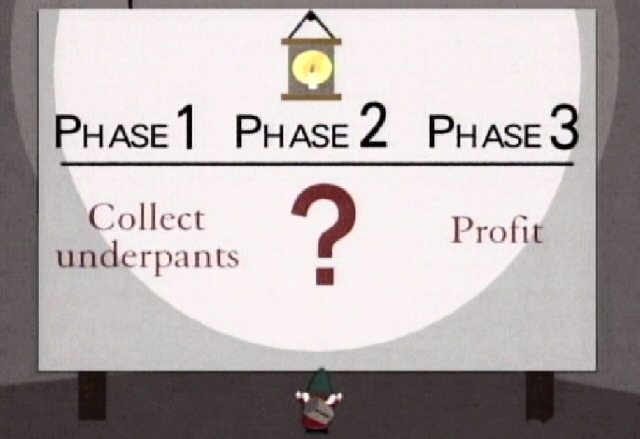
The Court of Appeal recently affirmed the findings of the Board of Chiropractic Examiners and its decision revoking a chiropractor’s license.  Sit back dear readers, and read of a scheme that reminds your humble blogger of that of the underpants gnomes.

It appears that Aster Kifle-Thompson, was employed at chiropractic clinics owned by her chiropractor husband Steven Thompson.  Steve was convicted of seven misdemeanor violations of Insurance Code section 1871.4 in 1997 and his license was revoked in 2000.  (For those curious amongst us, section 1871.4 deals with submitting fraudulent workers’ compensation bills.)

Steve and his wife Aster then set up a series of shell corporations managing and owning several clinics, and then submitted fraudulent and excessive workers’ compensation claims for payment.  The scheme involved having an out-of-state physician, an M.D., who was licensed in California act as the “owner” of the corporation, while the services were actually provided by Kifle-Thompson and her husband.

The Board of Chiropractic Examiners found that Aster had committed several of the 35 alleged violations of section 317 of Title 16 of the California Code of Regulations (unprofessional conduct), citing the subsections mostly addressing dishonesty.

After the Board of Chiropractic Examiners found Kifle-Thompson had committed several of the 35 alleged instances of unprofessional conduct, and revoked her license.  The trial court, and in an unpublished opinion, the Court of Appeal, rejected Kifle-Thompson’s appeals.

So let it be known – the business model of:

Step one: get licensed

Step two: lose license by committing acts of dishonesty and workers’ compensation fraud

Step three: profit

Does not work!  It didn’t work for the underpants gnomes either!

Did you have to deal with the bills of Steve and Aster?  If any bills are still pending, you may want to take a look before paying them off.

Sleepless in Los Altos

Usually, your humble blogger sleeps the sleep of the just.  But the other night, something kept him from slipping blissfully into that world where claims are denied, liens are dismissed, and businesses flock to California to reap the soft, golden glow of low workers’ compensation costs.  A defense lawyer can dream, can’t he?

Instead, your humble blogger did a bit of research and came across a fellow of a similar affliction – Ronald S. Verna.  Mr. Verna, the applicant in the case of Ronald S. Verna v. City of Los Altos Police Department, sustained an injury and filed a claim, which was resolved by way of compromise and release with open future medical in 2008.

The writ denied case awarded applicant reimbursement for out-of-pocket costs for a continuous positive airway pressure machine, which was supposed to help him sleep, because his industrial back injuries resulted in weight gain and the use of opioid medications, in turn causing his sleep disorder, which in turn necessitated his purchasing of the machine.

In 2011, the parties went to trial on the issue of whether the defendant was required to pay for applicant’s sleeping machine.

At trial, the workers’ compensation Judge held that the sleep machine was a reasonable expense and included in the future medical treatment portion of the compromise and release, relying at least in part on applicant’s testimony as to his weight gain after his injury, but also on the opinions of his treating physician.  The WCJ ordered the applicant be reimbursed the $1,237.97 cost of the machine.

The WCJ rejected defendant’s argument that applicant was required to file a petition to reopen or that the compromise and release barred the claim because of the open medical clause.  The Court of Appeal and the Workers’ Compensation Appeals Board have rejected the defense’s appeal without much comment.

I don’t know if this is going to help me sleep any better.  After all, applicant gets to choose his primary treating physician, and can go up and down a defendant’s Medical Provider Network if one exists until he finds a PTP that is “agreeable.”  If an applicant, perhaps with the assistance of his counsel, finds such a treating physician, is there any sort of ailment or impairment that can not somehow be causally linked to the open medical award?

It’s entirely possible that the applicant in this case is honest, as is his physician, and his attorney.  Your humble blogger has never had any run-ins with any of them.  But, speaking generally, this seems like a weak point that can easily be exploited to enrich physicians and medical equipment providers, while providing free healthcare.

The Life of the Wife – Profiting from Comp. Strife

A recent panel decision has ruled that an injured worker entitled to in-home care treatment can “hire” his wife to provide the care, at the expense of the employer.  In the case of Ignacio Gomez v. Premium Roof Services, Inc., the panel ruled that workers’ compensation Judges do indeed have authority to order an employer/insurer to stop providing in-home care with some agency or another, and instead to pay an applicant’s wife to perform the acts instead.

If the facts sound similar, it is because you are a well-read and well-informed visitor to this most humble of blogs, and have probably seen this post on an insurer being forced to provide employment to an applicant’s illegal immigrant wife as the person providing his in-home care.

Applicant was receiving 10-12 hours of in-home care every week in accordance with the recommendations of an Agreed Medical Evaluator.  However, the agency hired by the insurer in this case proved “inadequate” to applicant’s tastes.  He made the claim that on the rare occasions when the in-home care staff would show up for duty, they would not do their job at all, let alone well.

So applicant petitioned to have this agency “fired” and his wife “hired” to provide the care instead.  Naturally, the defense objected, and with good reason.  Once applicant’s in-home care person is his wife, everything witnessed in the process of that care becomes privileged.  If applicant is faking his injury, his symptoms, or even his need for in-home care, how is the defense to prove it?  While testimony from in-home care staff might work in general, a defendant cannot compel an applicant’s wife to testify.

The reasoning given by the Workers’ Compensation Appeals Board includes the analogy comparing in-home care to a treating physician, noting that, at least with a treating physician, “[a] … relationship which will inspire confidence in the patient is an ingredient aiding in the success of the treatment.”  (citing Zeeb v. Workmen’s Comp. App. Bd.).

But surely in-home care is of a different nature of relationship than a physician.  Trusting someone with the future of one’s health, recovery, and ability to earn a living and enjoy life is not the same as trusting someone to perform in-home care tasks.  In the former, the patient relies on the years of training and experience elegantly concealed by a white coat and a smile.  In the later, applicant can readily supervise the work and see that it is to his satisfaction.

In any case, the remedy here should have been another agency, not applicant’s wife.  If the applicant has a complaint against the next agency, he can have the defendant replace them with a third or a fourth, so long as he documents properly his complaints.  After all, Nurse Case Managers are selected in a similar fashion.

Workers’ Comp. Mooching Off Other Insurers; Federal Government

As your humble blogger’s endless web of spies, informants, and double agents (collectively known as the internet), were bringing him reports of all the workers’ compensation doings going on in the world, an interesting gem was stumbled-upon.  It appears that a new study has been published regarding the shifting of expenses in workers’ compensation.

The research apparently included statistics from across the country, and looked at the costs absorbed by insurers and self-insured employers, as well as the overall costs shifted to third parties such as Medicare, Medicaid, and non-workers’ compensation insurance.  Lexis provides a nice summary of the study here.

Picture your typical worker contemplating a settlement proposal.  The worker knows that he or she is going to need some future medical treatment, but if a third-party is going to end up paying for it, perhaps those funds could be split between the defense and the applicant?

Your humble blogger has personally observed an in pro per applicant being advised that, if he had personal health insurance through his employer or through his spouse’s employer, perhaps he could bargain away the right to future medical treatment for cash-on-hand.  And in other cases, a very unhappy lien representative lawyer for a certain non-workers’ compensation insurance company sat as the other parties practically high-fived each other over reaching an agreement by shoveling medical expenses onto the third party.

It also seems to be common practice to shoot for a settlement figure two cents under $25,000 to avoid CMS intervention in a case, and allow the Federal Government to pick up the tab of future medical treatment.

Ethical issues aside, this isn’t a particular badge of honor as to the efficiency and sustainability of the workers’ compensation system.  One cannot operate a widget factory by stealing widgets from the more sustainable factories in the neighborhood.  Sooner or later, they’ll start locking their doors.

The study apparently found that almost $27 billion of $51.7 billion estimated in workers’ compensation costs for 2007 were absorbed by third parties.

We might all pat ourselves on the back, join hands with applicants’ attorneys and lien claimants, and laugh at those poor suckers picking up the slack for comp.  But, before we tap the kegs and light the cigars, your humble blogger, ever the pessimist, would just like to point out a small fact:  workers’ compensation is too expensive in its current state.  (Ok, NOW we can tap the kegs!)

Even with poor bystanders getting stuck with the bill, workers’ compensation is still too expensive and keeps losing money.  Reserves must consistently be replenished and the industry continues to suffer across the board.  What will happen when these third parties wise up and stop carrying half the Kool-Aid bottles that the comp world is drinking?

While the ship is still afloat, let’s drain some of the water in the decks instead of tying ourselves to more sea-worthy craft.

Lien Claimant Sanctioned for $40 Offer of “Compensation” to Applicant

Lien claimants.  As a workers’ compensation defense attorney, it’s always nice to see the workers’ compensation Judges and Workers’ Compensation Appeals Board take notice of wrongful behavior on their parts.  Thus, I bring to your attention the case of Gabriel Sanchez v. Enrichment Enterprises, Inc.  The case-in-chief is not the focus of today’s post.

The lien at issue was that of translating services allegedly provided at five medical appointments.  An interesting twist in the case is that applicant speaks English and apparently appeared in propria persona at one point without the assistance of a translator.  The lien being contested by the attorney for defendant, lien claimant decided to raise the stakes to collect.  And raise the stakes he certainly did.

It appears that Alberto Stambuk, the owner of Logos Language, stands accused of approaching the applicant at a status conference and offering him some sort of compensation if he would tell the WCJ that he needed the services provided by the translator.  In fact, if the applicant is to be believed, he was offered $40.00 and possibly lunch by Mr. Stambuk for his “assistance.”  Instead, lien claimant was sanctioned $2,500.

Your humble blogger is not one to side with applicants, but I can see where Mr. Sanchez is coming from with respect to interpreter services.  Mr. Sanchez probably exerted considerable effort to learn English as a second language and is probably quite proud of being able to communicate in English.  At the same time, there is absolutely no reason to have a total stranger in the room with you and your treating physician “translating” for you.

Ultimately, the sanctions were upheld and the Court of Appeal denied lien claimant’s petition for a writ of review.  Applause is deserved by the WCJ and WCAB for making sure this sort of behavior is detected, processed and punished.  At the same time, the defense was very fortunate in that the applicant appeared to be an honest person who was unwilling to lie to a WCJ for $40 and a meal.  It does not take much stretching of the imagination to picture a lien claimant offering more “compensation” to an applicant less ethical than Mr. Sanchez, and some agreement being reached.